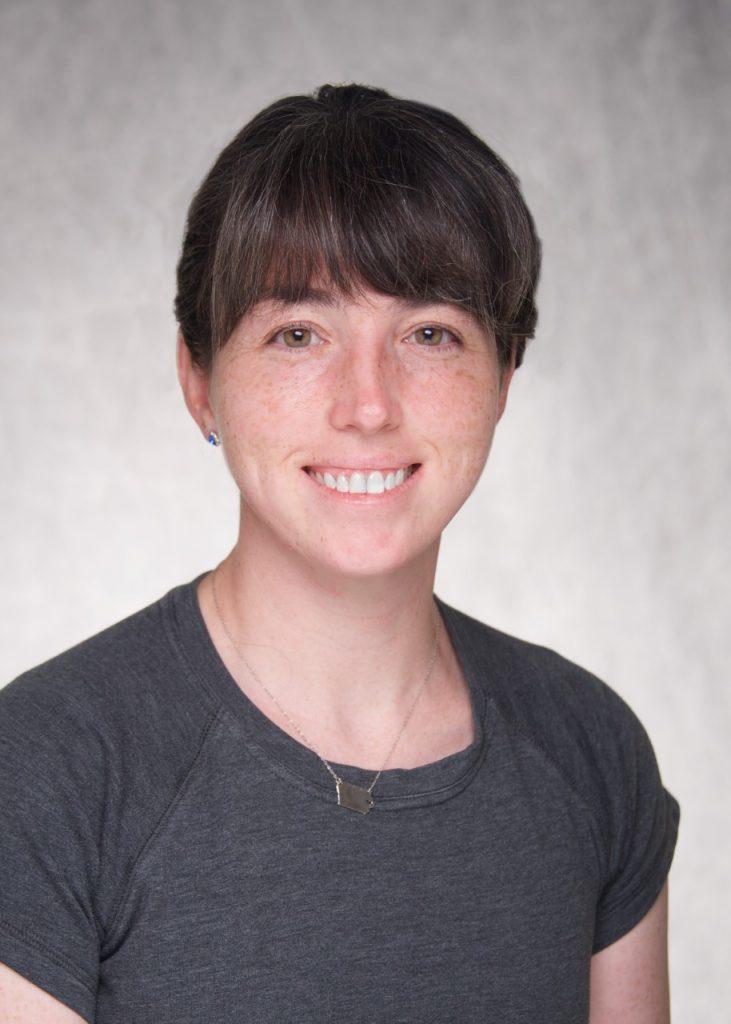
Since 2017, the F.O.E. Diabetes Research Center has maintained a NIH supported Diabetes Research Training Program for postdoctoral scholars. The purpose of this Program is mentor and train the next generation of investigators who will devise better approaches to prevent, treat, and ultimately reverse diabetes. The Training Program is led by Dr. Norris from our Division. The Program supports up to 6 concurrent postdoctoral trainees. This spring, the Program had an unprecedented number of outstanding applicants. To better support training under these circumstances, Dr. Norris partnered with Dr. Bertha Martín, one of the applicants, and her mentor Dr. Jon Resch to create a grant supplement application. This application has now been funded, as NIH grant 3T32DK112751-07S1. We look forward to Dr. Martín’s research development.
Potent medications have recently been developed to treat cystic fibrosis. These new therapies dramatically improve lung disease for those with cystic fibrosis. Persons with cystic fibrosis often develop a unique form of diabetes termed cystic fibrosis related diabetes (CFRD). It is not yet clear how the new therapies will impact the propensity of persons with cystic fibrosis to develop CFRD. A group of researchers, clinical experts, and patients/families were assembled by the NIH and the Cystic Fibrosis Foundation to discuss research priorities to better understand treat and prevent CFRD. This group convened in June of 2021 at a workshop open to the public. This group has now written and published a summary describing their collective thoughts on research priorities priorities CFRD, Their writings appear this month in the two journals Diabetes and Diabetes Care. Contributing to the article were two physicians from our division: Dr. Norris and Dr. Larson Ode, with Dr. Norris serving as one of the lead authors of the work. The publication can be found at the following Pubmed link.
Persons with cystic fibrosis typically have an imbalance in their fatty acid levels. A prominent aspect of this imbalance is a deficiency of linoleic acid, which is one of the so-called essential fatty acids. Despite decades of research, the mechanisms of the imbalance are not fully understood. To better understand this fatty acid imbalance, a group of researchers at the University of Iowa, Kansas State University, and the Karolinska Institutet in Stockholm Sweden worked together to study pigs and ferret with cystic fibrosis. The results showed that the imbalance exists at birth even before first feeding. This result argues strongly against one of the leading prior hypotheses which was that the imbalance might stem from the nutrient malabsorption that occurs in cystic fibrosis. Instead, the results suggest that several molecular mechanisms might be responsible for the imbalance, including excess metabolism of arachidonic acid, oxidative isomerization of unsaturated fatty acids, and/or biliary loss of phospholipids containing unsaturated fatty acids. The senior author of the resulting manuscript describing the findings was Dr. Norris from our Division. The work can be found published in the journal Clinical Science (link).
Cystic fibrosis is a genetic disease that causes dysfunction in multiple systems, but especially in the lungs which progressively deteriorate. The past few years have seen massive progress in the medical treatment of cystic fibrosis. Drugs have come to market that correct the basic molecular defects that cause cystic fibrosis. These drugs are classified as “highly effective modulator therapies”. These therapies must be tailored to each person, by matching to the different mutations that cause cystic fibrosis. In 2019, a blend of three modulators was approved for treatment of the most common form of cystic fibrosis involving the “F508del” mutation. This therapy combines elexacaftor, tezacaftor, and ivacaftor (“ETI”). This therapy dramatically improves lung dysfunction in persons with cystic fibrosis due to F508del mutation. Persons with cystic fibrosis are at very high risk to develop diabetes. For example, those who have only have F508del mutation have an over 80% chance of developing diabetes by middle age. It is currently not known if ETI-therapy for cystic fibrosis will impact diabetes risk. To address this knowledge gap, investigators from 5 institutions conducted a study of twenty persons with cystic fibrosis. Each person underwent an oral glucose tolerance test before and roughly 10 months after starting ETI-therapy. Interestingly, there was not a significant change in glucose levels after starting ETI. However, C-peptide levels increased with ETI therapy, consistent increased insulin secretion. Accordingly, an insulin resistance index significantly increased as did body mass index. Taken together, these results suggest that ETI therapy produces a degree of insulin resistance, likely related to an increase in body mass index. The longer term impact of ETI and related therapies on diabetes risk and body weight will need careful ongoing study. The faculty investigators involved in the study from our division were Dr. Larson Ode and Dr. Norris. The publication describing the study and results can be found at this Pubmed link.
Fraternal Order of Eagles Diabetes Research Center
There is a drastic need to devise better approaches to prevent, treat, and ultimately reverse diabetes. Essential to any progress is the constant training of skilled cohorts of research investigators. To this end, since 2017, the University of Iowa has nurtured a Diabetes Research Training Program. The Program supports mentored postdoctoral training focused on various diabetes research topics. Six postdoctoral trainees are supported at any given time, typically for two years each. To date, 19 postdoctoral trainees have been support by this Program, including pediatric endocrine faculty Dr. Pinnaro while she was a fellow. The Program was conceived by adult endocrinologist Dr. Dale Abel and pediatric endocrinologist Dr. Norris. Based on a proposal detailing their vision, they received a 5-year “T32” grant from the NIH to fund the program 2017-2022. During this time, the Program has been a resounding success, with most trainees having progressed onward in their research careers in academia or related private industry. Based on the strengths of the initial trainees, their research, and career progress, last year Drs. Norris and Abel wrote a renewed 5-year proposal for ongoing training. Today, we are pleased to announce that the proposal was viewed very favorably and that an additional 5 years of grant support will be provided by the NIH (you can view a summary of the grant at this link). Future or existing pediatric endocrine fellows who are interested a career focused on diabetes research can benefit from this program and are encouraged to contact Dr. Norris to discuss the application process.
For reasons that are not well understood, persons with cystic fibrosis are at very high risk to develop diabetes. A major factor in this risk is poor secretion of insulin from beta-cells. A research team at the University of Iowa has now published findings that may have identified one of the root causes. The team found exceptionally high levels of reactive oxygen species in pancreas with cystic fibrosis. Furthermore, the islets isolated from cystic fibrosis pancreases exhibited increased production of reactive oxygen species and impaired secretion of insulin. However, two different approaches aimed at reducing or neutralizing excess reactive oxygen species production failed to improve insulin secretion. Nonetheless, the findings highlight what might be an important contributor to poor insulin secretion in persons with cystic fibrosis. From our division, Dr. Andrew Norris contributed to the research and publication. The paper can be found at this DOI link and a full text version can be found at this PubMed Central link.
The Fraternal Order of Eagles Diabetes Research Center
Each June, the American Diabetes Association hosts its annual scientific meeting. This meeting is the world’s largest and most important gathering focused on diabetes research, attracting over 10,000 attendees who come from across the world to hear the latest cutting edge research. This year, the University of Iowa was featured in a short video film shown at the meeting. The video focused on how the Fraternal Order of Eagles Diabetes Research Center (FOE-DRC) is advancing diabetes research . The FOE-DRC was created in 2008 when the Fraternal Order of Eagles pledged $25 million to establish a diabetes research center at the University of Iowa. With this gift, the FOE-DRC has grown to include over 100 faculty researchers from across the University. Collectively, these faculty conduct over $30 million of NIH-funded research annually. Several members of our Division are faculty in the FOE-DRC: Drs. Curtis, Larson Ode, Norris, Pinnaro, Tansey, and Tsalikian. Earlier this year, the American Diabetes Association requested that investigators at the University of Iowa help create a short video highlighting the work of the FOE-DRC. The video is now available on youtube (link to video here). The video highlights work by two members of our Division: Dr. Larson Ode and Dr. Norris, as well as several colleagues in the Division of (Adult) Metabolism and Diabetes and in the FOE-DRC.
Type 2 diabetes affects over 35 million Americans and is a leading cause of disability, expense, and mortality. Type 2 diabetes occurs worldwide and some countries have rates up to roughly three times higher than in the US. Type 2 diabetes rates are climbing, in part because there are not optimal therapies and preventative strategies. Dr. Norris has contributed to a team that has identified a novel molecular target to treat type 2 diabetes. The new findings have now been published in the scientific journal Nature Communications (link). The new target is a protein named SWELL1. It is a chloride transport protein and is involved in beta-cell and adipose tissue functions. Interestingly, certain small molecules that inhibit SWELL1 both improve insulin sensitivity and increase beta-cell function. This combination of effects potently improved blood sugar levels in mice, indicating that these types of SWELL1 inhibitors may be a very effective means to treat and/or prevent type 2 diabetes.
The Fraternal Order of Eagles Diabetes Research Center (FOE-DRC) is located at the University of Iowa. The FOE-DRC was created in 2008 when the Fraternal Order of Eagles pledged a $25 million gift toward diabetes research. Since then, the FOE-DRC (link to FOE-DRC homepage) has grown to include over 100 faculty researchers from across the University. Collectively, these faculty conduct over $30 million of NIH-funded research annually. Major innovations have included studies of mitochondrial function, muscle wasting in diabetes, heart dysfunction in diabetes, diabetes in cystic fibrosis, and use of electromagnetic fields to lower blood sugar. From 2013-2021, the Center was under the stellar leadership of Dr. Dale Abel, who now has been recruited to lead the Department of Internal Medicine at UCLA. While a new permanent FOE-DRC head is being recruited, Dr. Andrew Norris from our Division will serve as interim Co-Director of the FOE-DRC, alongside Dr. Kamal Rahmouni. From 2014-2021, Dr. Norris served as Associate Director of the FOE-DRC. Dr. Norris has been a diabetes researcher for over 2 decades, leading translational studies related to the integrated physiology of diabetes across the lifespan, with recent focus on cystic fibrosis related diabetes and early life determinants of diabetes risk.
Dr. Catherina Pinnaro and her research team have just published a new report indicating benefits to reviewing diabetes device blood sugar data. The article is entitled “Diabetes Device Downloading: Benefits and Barriers Among Youth with Type 1 Diabetes”, and was just published as a peer reviewed research article in the Journal of Diabetes Science and Technology (pubmed Link; doi Link). Importantly, the data suggest that blood sugar levels improve when patients/families make insulin plan adjustments based on review of recent blood sugar patterns. Co-authors on the work from our division included Drs. Tansey, Tsalikian, and Norris. Also contributing as the lead author was future pediatric endocrinologist Dr. Benjamin Palmer.