There remains much to learn about endocrinology, and most of the conditions we treat do not have definitive cures. To help advance the field, the faculty in our Division direct endocrinology-focused research ranging from laboratory biomedical science to clinical studies. Here we report some of our noteworthy progress.
A new study demonstrates that CFTR function can slow pancreatic ductal-cell growth while beneficially reshaping key pathways that regulate cell proliferation. The findings are especially relevant to endocrinology given the close, but still incompletely understood, relationship between pancreatic disease, diabetes, and pancreatic cancer. As highly effective CFTR modulators continue to transform care for people with cystic fibrosis, this work provides new insight into how these therapies may influence long-term pancreatic health and disease risk. Dr. Norris from our Division contributed to the publication, which can be found at this pubmed link.
Hypoglycemia is a frequent manifestation of glycogen storage diseases. As such, pediatric endocrinologists are often aid in the diagnosis and/or treatment of these diseases. To this end, Dr. Larson Ode has been assisting a new team of scientists who are working to better understand how to manage glycogen storage diseases. In a new scientific article, this group has characterized the genetic, metabolic, and lipidomic profiles of cultured fibroblasts from nine different persons affected by glycogen storage disease type III. These now well-characterized cell lines will be a useful tool to test new therapeutic approaches. The work is published in the journal Molecular Genetics and Metabolism, and its abstract can be found on PubMed at this link.
We are proud to recognize Dr. Larson Ode as a co-author of a groundbreaking clinical trial published last week in the New England Journal of Medicine. The study demonstrates the effectiveness of a novel treatment of acquired hypothalamic obesity, a rare and devastating condition that until now has lacked effective medical therapies. In the phase 3 trial, researchers evaluated setmelanotide in children and adults with hypothalamic obesity resulting from tumors, injuries, or other damage to the hypothalamic region of the brain. After 52 weeks of treatment, participants receiving setmelanotide experienced a 16.5% reduction in body mass index (BMI) on average, while those receiving placebo showed an increase in BMI. The findings represent an important breakthrough for patients and families affected by hypothalamic obesity, a condition that is notoriously difficult to treat because it disrupts the brain pathways that regulate appetite and energy balance. By targeting the key brain pathways involved, setmelanotide addresses the mechanisms underlying the disease rather than simply treating its symptoms. Published in one of the world’s leading medical journals, this study provides compelling evidence that setmelanotide may offer a much-needed therapeutic option for individuals living with acquired hypothalamic obesity. We congratulate Dr. Larson Ode and her co-authors on this significant achievement and on their contributions to advance care for patients with complex obesity disorders. The study’s abstract can be found at this PubMed link.
Dr. Larson Ode also contributed to a followup article published shortly after the above main article. The followup article describes the impact of setmelanotide on the participants’ energy levels, physical activity, and their perception of the impact of the medication on their quality of life. This very practical outcome measure is extremely important, arguably even more than the biological outcomes addressed in the original article. The reason is that hypothalamic obesity is associated with poor energy levels and substantial reductions in quality of life, beyond simple obesity. This study found meaningful improvements in perceived energy and activity levels in the majority of participants receiving setmelanotide but only in a very small fraction of those receiving placebo. It is important that this new therapy has the potential to improve quality of life in people who have acquired hypothalamic obesity. The study’s abstract can be found at this PubMed link.
We are pleased to recognize Dr. Norris for co-authoring a chapter in the newly published textbook Modern Diabetology: Basic Science and Clinical Practice. This authoritative volume brings together internationally recognized experts to provide a comprehensive overview of the latest advances in diabetes research, translational science, and clinical management. Designed as a practical resource for physicians and researchers alike, the textbook addresses the rapidly evolving landscape of diabetes care while highlighting important scientific discoveries and evidence-based clinical practices. Dr. Norris co-authored Chapter 18, “Cystic Fibrosis–Related Diabetes,” an increasingly important topic at the intersection of endocrinology and cystic fibrosis care. As survival continues to improve for individuals with cystic fibrosis, the recognition and management of cystic fibrosis–related diabetes have become critical to optimizing long-term health outcomes and quality of life. We congratulate Dr. Norris on his contribution to this publication and thank him for sharing his expertise to help advance the understanding and care of patients living with diabetes and related endocrine disorders.
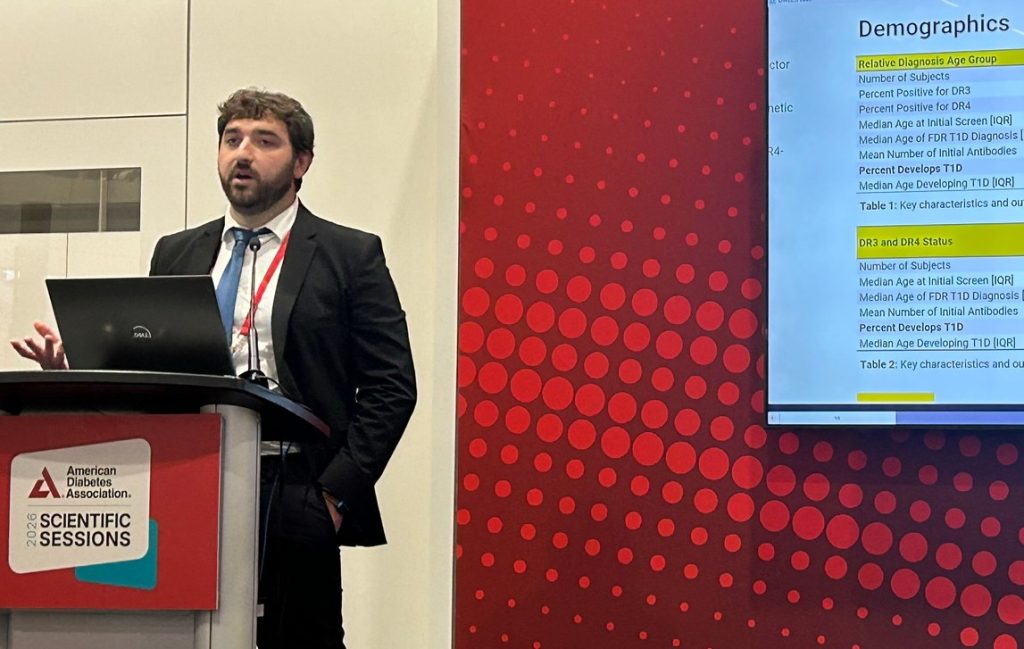
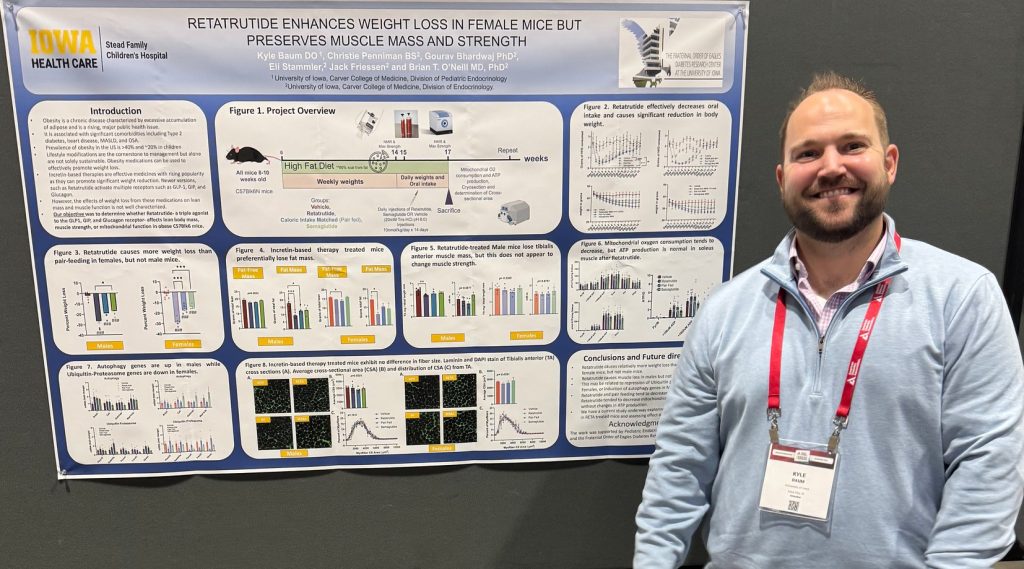
In early June, the American Diabetes Association held its annual international scientific meeting. Over 12,000 diabetes researchers and physicians from around the globe gather to discuss the newest and most important developments in diabetes research. Our two senior fellows had their work selected to be presented at the meeting. We are proud that they were selected for this honor. Also, several faculty from our division contributed to presentations at the meeting including Drs. Larson Ode, Norris, Pinnaro and Tansey. The fellow research presentations were as follows:
Dr. Power: “Age at Type 1 Diabetes Diagnosis Is an Independent Risk Factor from HLA for Development of Type 1 Diabetes in First-Degree Relatives” (abstract doi link)
Dr. Baum: “Retatrutide Enhances Weight Loss in Female Mice and Preserves Muscle Mass, Strength, and Mitochondrial Efficiency” (abstract doi link)
Each year, pediatric endocrinologists from around the world attend the “PES Annual Meeting”, hosted by the Pediatric Endocrine Society (PES). This year’s PES meeting was held April 30 – May 3. Several Division members were selected to present their research and/or to share their clinical expertise.
Dr. Baum: Presented a poster on his research into how potent obesity medications impact skeletal muscle health.
Dr. Power: Gave a lecture regarding his research examining how the age at which type 1 diabetes develops might run in families.
Dr. Kanner: Gave a symposium talk on primary ovarian insufficiency in adolescents.
Congratulations to all for helping advance the field of Pediatric Endocrinology.
Photos of division members at the meeting can be found in the pictures section here.
A newly published manuscript examines the relationship between HbA1c and continuous glucose monitoring (CGM)–derived metrics in adults with cystic fibrosis–related diabetes (CFRD). This work addresses an ongoing clinical question in CFRD care, particularly in the era of widespread CGM use and modern CFTR modulator therapy. Drawing on real-world data from adults with established CFRD, the study demonstrates agreement between HbA1c and CGM-derived measures of mean glycemia, reinforcing clinical relevance of HbA1c while underscoring the added value of CGM metrics. Dr. Larson Ode from our division contributed to the manuscript, highlighting her ongoing commitment to advancing evidence-based care for people with cystic fibrosis and diabetes, and we congratulate her and the full author team on this meaningful contribution to the field.
A new multinational, phase 3 clinical trial published online ahead of print in the European Journal of Endocrinology studied the growth promoting effects of once‑weekly growth hormone analog versus standard daily growth hormone (GH) therapy for children living with Noonan syndrome. The results show that the weekly analog approach is superior to the daily approach in terms of enhancing growth rate. The study, titled “Once‑weekly Somapacitan in Children with Noonan Syndrome: Randomised Controlled Phase 3 Trial”. The trial authors included contributions from Dr. Tansey from our Division. A total of 77 children with Noonan syndrome were enrolled in the trial and randomized 2:1 to the once‑weekly standard or daily GH preparations over a one-year period. The children receiving the weekly analog grew a little faster (13% on average, statistically significant) compared with the daily GH group. Importantly, the weekly analog was well tolerated, showing a safety profile comparable to daily GH. It will be important to ascertain the long term impact of the weekly analog on final adult height in this population. These findings highlight a promising, less burdensome therapeutic option for families. We thank Dr. Tansey for his role in advancing this impactful work. The abstract of the work can be found at this pubmed link.
Our division has contribution to a clinical study recently published in Diabetes Technology & Therapeutics : “Inhaled Technosphere Insulin in Children with Diabetes: The INHALE-1 Extension Study.” One of our Division physicians, Dr. Tansey, served as a co-author on this important research. This paper describes an extension phase to the INHALE-1 trial to better examine long-term safety of an inhaled form of insulin. The results from the first 26-week phase of trial were published several months ago. Inhaled insulin demonstrated similar glucose levels to conventional therapy with injected insulin but greater treatment satisfaction. The extension phase of the trial allowed participants the option to continue inhaled insulin for another 26 weeks to further evaluate safety. Even after one year’s treatment, there were no serious pulmonary complications among the participants. There was a small increase in hemoglobin A1c from week 26 to week 52 (from 8.2 to 8.6%). The manuscript abstract is available on Pubmed. The results show the potential safety of inhaled insulin for children with type 1 diabetes. We especially wish to thank the research coordinators, research participants and their families who made this study possible.
A group of researchers have identified a key protein complex in muscle cells that regulates the body’s response to nutrients and helps maintain healthy blood sugar levels. The researchers focused on the role of this complex, known as LRRC8, in muscle lysosomes. Lysosomes are tiny compartments inside cells that act like recycling centers. The researchers found that lysosomal LRRC8 plays a critical role in governing cellular growth and metabolism. When LRRC8 was disrupted in lab-grown muscle cells, lysosomal function was impaired, weakening how muscle cells responded to nutrients and to insulin. Furthermore, mice lacking lysosomal LRRC8 developed increased body fat, insulin resistance, and poor glucose tolerance — conditions closely linked to type 2 diabetes. This research uncovers a previously unknown connection between LRRC8 lysosomal function in muscle cells and whole-body metabolic health, opening new avenues for understanding and potentially treating metabolic diseases such as type 2 diabetes. Dr. Norris from our division was part of the research team and is a co-author on the manuscript. The peer-reviewed findings are published in Science Advances under the title: “Lysosomal LRRC8 complex impacts lysosomal pH, morphology, and systemic glucose metabolism.” The abstract is available on PubMed: https://pubmed.ncbi.nlm.nih.gov/41004571/.