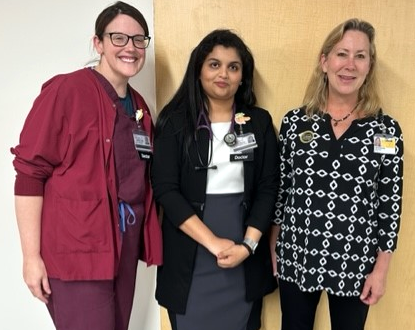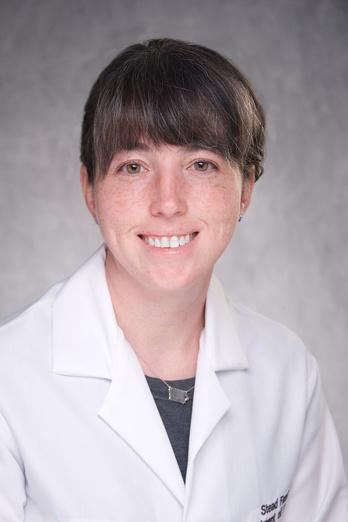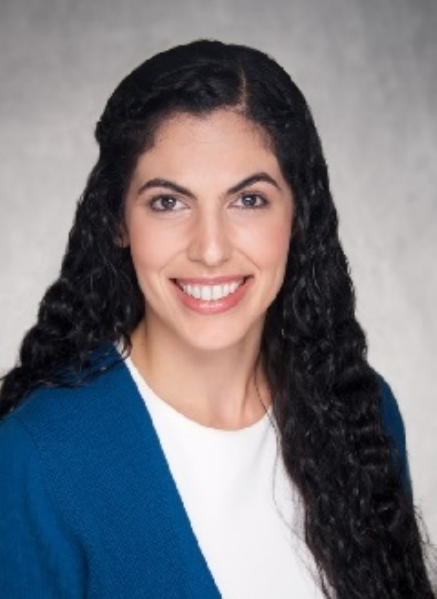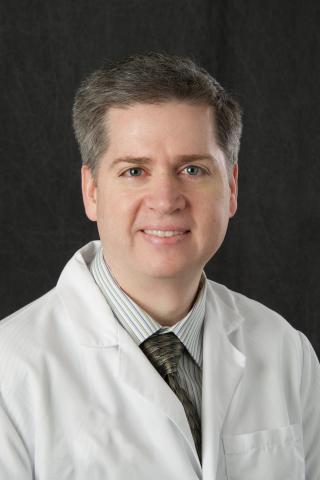
Dr. Pinnaro is part of the leadership team that has created a new national registry to track the health of persons with Turner syndrome. The initiative has been named the “Inspiring New Science to Guide Healthcare in Turner Syndrome (InsighTS)” Registry. The leadership group of the InsighTS Registry has now published their study’s design and goals. The publication’s abstract can be found on PubMed at the following link. Persons with Turner syndrome have unique health risks, and ideally should be seen regularly in a clinic with Turner syndrome expertise, such as the one at the University of Iowa Stead Family Children’s Hospital (2023 link to the Turner syndrome clinic) headed by Dr. Alexandrou and Dr. Pinnaro.
Persons with Turner syndrome are at higher risk than normal to develop diabetes. It would be ideal to screen for diabetes to allow treatment early in the disease process. The natural history of diabetes in persons with Turner syndrome is not well understood. Likewise, the optimal screening approach is not known. To help address this knowledge gap, Dr. Pinnaro from our division led a team that compared results between multiple types of screening tests for diabetes assessed concurrently in persons with Turner syndrome. The screening tests compared were fasting plasma glucose, oral glucose tolerance test, and hemoglobin A1c. The results showed only partial concordance between the different tests. Interpreted conservatively, the data suggest that various hemoglobin A1c thresholds could be used to indicate need for closer evaluation for diabetes. The results are published in the journal Hormone Research in Paediatrics as an article entitled “Screening for Turner syndrome-associated hyperglycemia: Evaluating hemoglobin A1c and fasting blood glucose”. Study authors from our division were Drs. Pinnaro, Parra Villasmil, and Norris. The article’s Pubmed abstract can be found at this link.
Potential endocrine problems are under studied in children with pancreatitis. Dr. Larson Ode from our division is part of a multicenter team that is investigating endocrine complications in children with pancreatitis (either chronic or acute recurrent). They have just published results from a study examining height and bone density in children with pancreatitis. Their manuscript is published in the journal Pancreatology (link to manuscript). The found an excess portion of children with pancreatitis had low height and/or low bone mineral density. These results indicate that children with pancreatitis need closer attention to their growth and to their bone health. It would be ideal for such children to be followed in a multidisciplinary clinic devoted to children with pancreatitis, such as the nationally recognized Pancreatitis Clinic at the University of Iowa Stead Family Children’s Hospital (link).
Persons with diabetes can have weakened immune systems that are unable to fight off infections. Vaccination response depends on the immune system creating protective immunity after exposure to an antigen. Indeed, under some circumstances persons with diabetes fail to develop immunity after vaccination. Most data to date however have focused on adults. In particular, no studies have examined the response of children with diabetes to COVID vaccination. In a collaboration between the Microbiology Department, our Division set out to address this knowledge gap. Both antibody levels and cellular immunity against the COVID virus were compared between children with and without type 1 diabetes. The levels were also compared between the children that had versus had-not received COVID booster vaccination. Importantly, the children with diabetes exhibited normal levels of immunity that matched those of children without diabetes. This result shows that children with diabetes have normal immune responses, at least as regards protection against COVID, including before and after booster vaccination. Surprisingly, COVID booster vaccination did not statistically raise immunity against the Omicron COVID variant in either group of children. One possible reason for this may have been that the children groups appeared to already have a degree of immunity against Omicron even without booster vaccination, though the study was not designed to properly address this possibility. By contrast, adults were also studied and experienced a robust enhancement of immunity in response to booster vaccination. Members of our Division who helped create and conduct the study were Drs. Pinnaro, Tansey, and Norris, as well as research manager Shannon Christensen. The publication can be found at this Pubmed link. The authors wish to thank the children and families who volunteered for the study.
Since 2017, the F.O.E. Diabetes Research Center has maintained a NIH supported Diabetes Research Training Program for postdoctoral scholars. The purpose of this Program is mentor and train the next generation of investigators who will devise better approaches to prevent, treat, and ultimately reverse diabetes. The Training Program is led by Dr. Norris from our Division. The Program supports up to 6 concurrent postdoctoral trainees. This spring, the Program had an unprecedented number of outstanding applicants. To better support training under these circumstances, Dr. Norris partnered with Dr. Bertha Martín, one of the applicants, and her mentor Dr. Jon Resch to create a grant supplement application. This application has now been funded, as NIH grant 3T32DK112751-07S1. We look forward to Dr. Martín’s research development.
As a budding physician scientist, Dr. Cat Pinnaro is studying how persons with Turner syndrome (TS) are impacted by diabetes. Persons with TS have increased risk of developing diabetes. Diabetes then negatively impacts their health, perhaps more so than for the general population. The mechanisms by which diabetes develops in those with TS have not been well studied, and thus preventative strategies are lacking. Dr. Pinnaro is working to address these shortcomings by creating new clinical studies of blood sugar metabolism in persons with TS. To further her research endeavors, she applied for and just received a prestigious NIH K23 Career Development Award. Her proposal is entitled “Hyperglycemia in Turner syndrome: Mechanisms and X chromosome contributions“. Congratulations Dr. Pinnaro!
Cystic fibrosis (CF) increases the risk of several endocrine complications, especially diabetes and bone weakening. The causes and treatments of these conditions are somewhat unique in CF, with some differences from the treatment of diabetes and weak bones in the general population. The Cystic Fibrosis Foundation (CFF) has recognized the need to train and mentor endocrine physicians to provide endocrine care for persons with CF. To help meet this need, the CFF has identified and supported nationally recognized mentor endocrinology physicians with CF-expertise. One of these leaders is Dr. Katie Larson Ode from our division. In recognition of her expertise and outstanding mentoring, the CFF has just renewed her role in this national effort with a grant entitled “EnVision CF III: Emerging Leaders in CF Endocrinology Chair”. Additionally, the CFF has awarded an ongoing research grant to Dr. Larson Ode, entitled “SPECTRUM and CF Endocrine and Diabetes DAta Repository (CEDAR)”. Congratulations to Dr. Larson Ode on these accomplishments and thanks to her for her efforts to help support the health of those with CF.
We have known for a long time that thyroid conditions can be linked to eye problems. This usually happens when someone has hyperthyroidism, especially if it is caused by Graves disease. The various eye problems associated thyroid dysfunction are collectively called “thyroid eye disease”. Sometimes, especially with Graves disease, the muscles behind the eye can become thickened and inflamed. One challenge is that thyroid eye disease has not been as well studied in children compared to adults. To learn more, Dr. Pesce from our Division teamed up with several ophthalmologists from the University of Iowa. They used ultrasound to examine the eye muscles of 20 children with thyroid disease. Most of the 20 children had Graves disease. Nearly all the children had abnormal enlargement of the eye muscles. Importantly, it was not possible to determine the severity of the enlargement from symptoms alone in children under 10 years of age. This suggests that referral to a pediatric ophthalmologist with thyroid eye disease expertise should be considered in young children with Graves disease. The article can be found on Pubmed at this link.
Please join me in congratulating Dr. Lauren Kanner for her well earned promotion!! In brief, Dr. Kanner has been promoted from Assistant to Associate Professor in recognition of her clinical expertise, her dedication to teaching, her compassion as a physician, and her national recognition as a rising expert in the clinical care of adolescents with ovarian issues. She joined the University of Iowa Hospitals and Clinics in 2018, having just completed a pediatric endocrine fellowship at the University of Wisconsin. During fellowship she began to cultivate expertise in the diagnosis and treatment of ovarian hormonal conditions. She has spearheaded several new clinical initiatives at the University of Iowa, including initiating the Pediatric Endocrinology Polycystic Ovary Syndrome Clinic. She also serves to direct the Pediatric Lipid disorder clinic. In addition she practices general pediatric endocrinology and diabetes care, and she serves to provide outreach pediatric endocrinology services in the Quad Cities and attends in the LGBTQ and cardiometabolic clinics. To her peers and trainees, she is treasured for her stalwart devotion to teaching. Her expertise in ovarian health has earned her a national reputation, evidenced by her holding various leadership and service roles with the North American Society for Pediatric and Adolescent Gynecology. In the education realm, she serves as the Assistant Director of Medical Student Education in the Department of Pediatrics. Once again, congratulations to Dr. Kanner!
Some of the volunteer staff at Camp Hertko Hollow, 2023 (L-R): Drs. Lindower, Tansey, Palmer, Radig, Pinnaro, and Parra Villasmil.
Diabetes Camps are a summer highlight for many kids who live with diabetes. Camp represents a chance to experience outdoor fun, make new friends who understand what it is like to have diabetes and learn more about diabetes self-care, all while under the watchful eye of diabetes-knowledgeable camp counselors and staff. Several of the staff in our Division help support Camp Hertko Hollow (click for link), a diabetes camp in central Iowa with access to 400 acres of forest / outdoor recreation space. Dr. Pinnaro and Dr. Tansey serve to provide medical direction for the camp, and diabetes nurse Susan Huff has long volunteered to support the camp. Kids Week (ages 8-12) ran June 25-July 1 and Teen Week (ages 13-17) ran July 3-9. Also see the Camp website (link above) for details about Mini Camp and Family Camp opportunities. The doctors and nurses from our Division who have volunteered their time in camp this year: Dr. Pinnaro,Dr. Tansey, Dr. Parra Villasmil, Dr. Palmer, Dr. Tuttle and nurse Sue Huff.